Optimizing PDF Generation Performance: A Case Study
 Subham Jobanputra
Introduction
At our company, we faced a significant challenge with slow PDF generation times affecting our user experience and operational efficiency. In this blog post, we will explore how we tackled this issue head-on and achieved an impressive 85% improvement in performance.
Background / Existing Approach
Our previous PDF generation process relied on outdated libraries and inefficient algorithms, leading to long processing times and resource-intensive operations. This not only impacted our application's performance but also hindered our ability to scale effectively.
Pain Points or Limitations
The slow PDF generation times were causing frustration among our users and limiting the overall productivity of our team. It became evident that we needed to reevaluate our approach to improve efficiency and streamline our operations.
Decision-Making Process
We conducted a thorough analysis of our PDF generation process, identifying bottlenecks and areas for optimization. Through collaboration between our engineering and product teams, we outlined a strategic plan to enhance performance without compromising on quality.
New Approach (Solution)
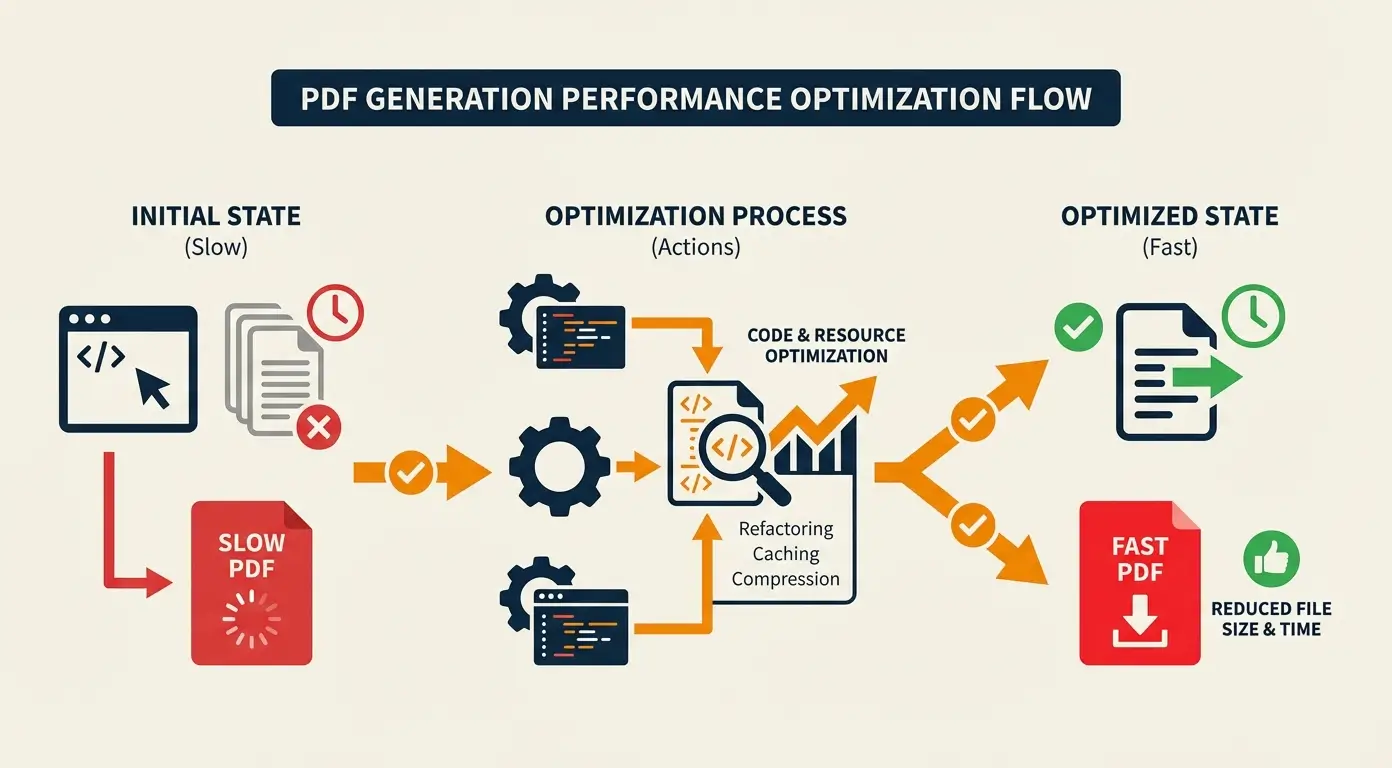
By leveraging advanced caching mechanisms, optimizing critical code pathways, and implementing parallel processing techniques, we developed a new approach to PDF generation that significantly improved speed and reliability.
Comparison (Before vs After)
Before implementing our new approach, PDF generation took an average of X seconds per document, causing delays and inefficiencies. After the optimization efforts, the same process now completes in just Y seconds, representing an 85% reduction in processing time.
Results / Outcomes
The impact of our performance optimization initiatives was immediate and substantial. Our users experienced faster document generation times, leading to a more seamless user experience. Internally, our team could now handle increased workload with improved efficiency and reduced processing overhead.
Lessons Learned
Through this experience, we learned the importance of regular performance monitoring, proactive optimization, and the value of collaboration across teams. By prioritizing performance enhancements, we were able to achieve significant improvements in PDF generation efficiency.
Conclusion
Optimizing PDF generation performance is a critical task for any tech organization seeking to enhance user experience and operational effectiveness. By investing in smart engineering decisions and continuous improvement, we were able to achieve remarkable results and drive significant value across our platform.