Optimizing React PDF Generation: A Comprehensive Guide
 Subham Jobanputra
Introduction
In the world of modern web applications, the ability to generate PDFs directly from React components has become a crucial feature. However, the process of achieving this seamlessly can often be challenging and complex.
Background
In the past, developers would typically rely on server-side rendering or third-party libraries to generate PDFs from React components. While this approach worked, it often introduced performance bottlenecks and limitations in customization.
Pain Points
- Limited control over styling and layout
- Complex setup and configuration
- Performance issues due to server-side rendering
Decision-making Process
When faced with these challenges, our team embarked on a journey to find a more efficient and flexible solution for generating PDFs from React components.
New Approach
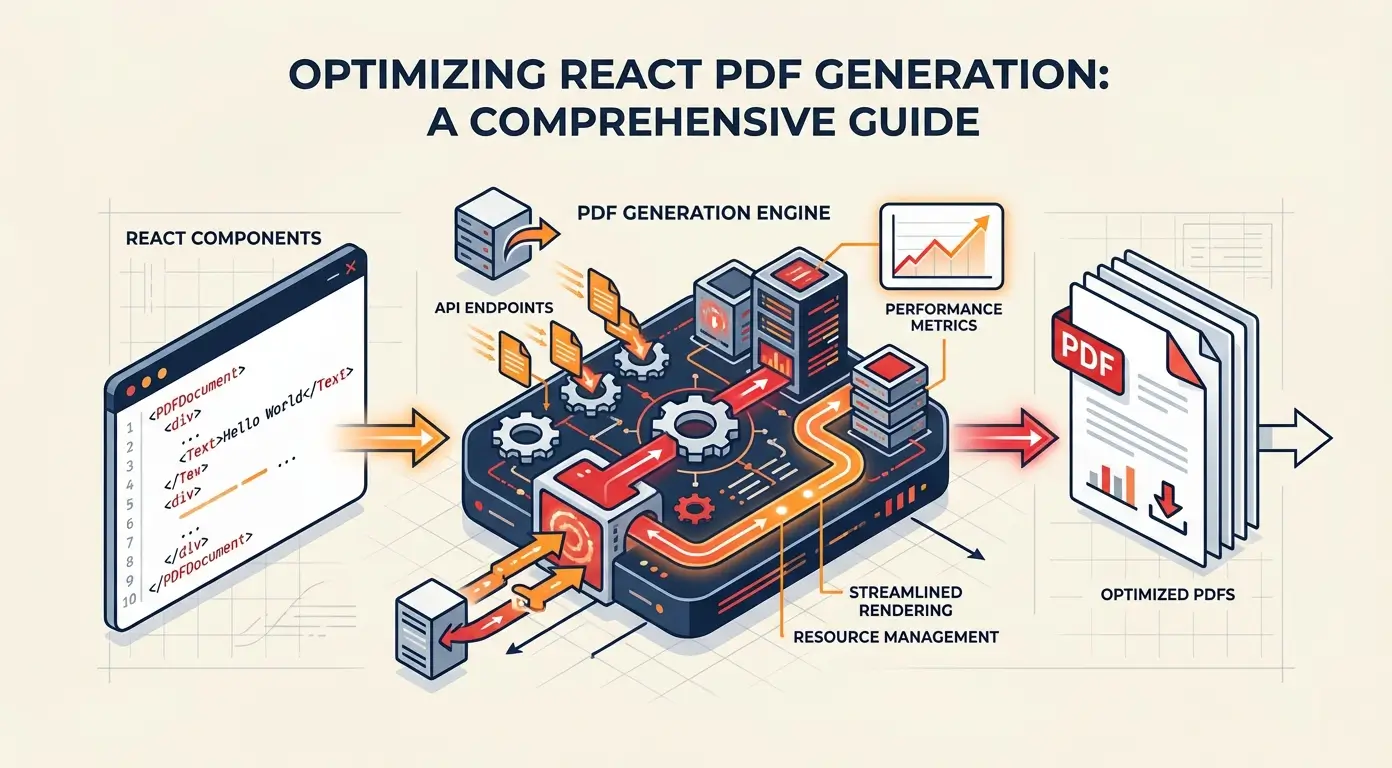
After thorough research and experimentation, we decided to leverage a combination of headless browsers and client-side PDF generation libraries to achieve our goals. By offloading the PDF generation process to the client side, we were able to improve performance and customization options significantly.
Comparison
Before adopting this new approach, our PDF generation process was slow, limited in design options, and prone to errors. However, with our new solution in place, we saw a substantial improvement in speed, flexibility, and overall user experience.
Results
By optimizing our React PDF generation process, we were able to streamline our workflow, enhance the visual appeal of our PDFs, and ultimately deliver a more polished product to our users. Additionally, the performance gains we achieved translated to improved overall system efficiency.
Lessons Learned
- Client-side PDF generation offers more flexibility and control
- Optimizing performance can have a significant impact on user experience
- Continuous experimentation and adaptation are key to staying ahead in a rapidly evolving tech landscape
Conclusion
The journey to optimizing React PDF generation was not without its challenges, but the results speak for themselves. By embracing new technologies and approaches, we were able to overcome previous limitations and deliver a more refined product. Remember, the key to success lies in constantly pushing the boundaries of what is possible.