Optimizing PDF Generation: Processing Thousands of Documents Efficiently
 Subham Jobanputra
Introduction
Processing a large number of documents through batch PDF generation presents a common challenge for developers and technical decision-makers. In this blog post, we will explore the best practices and strategies to optimize this process, enhancing performance and scalability.
Background
Traditionally, processing thousands of documents to generate PDFs involved manual intervention and time-consuming tasks. This approach often resulted in bottlenecks, increased processing time, and reduced efficiency.
Pain Points
The traditional method of batch PDF generation had several limitations, including slow processing speeds, high resource consumption, and limited scalability. These pain points hindered the overall performance of the system and impacted user experience.
Decision-Making Process
To address these challenges, our team embarked on a decision-making process to revamp the batch PDF generation system. We analyzed the existing workflow, identified pain points, and outlined the requirements for a new solution.
New Approach
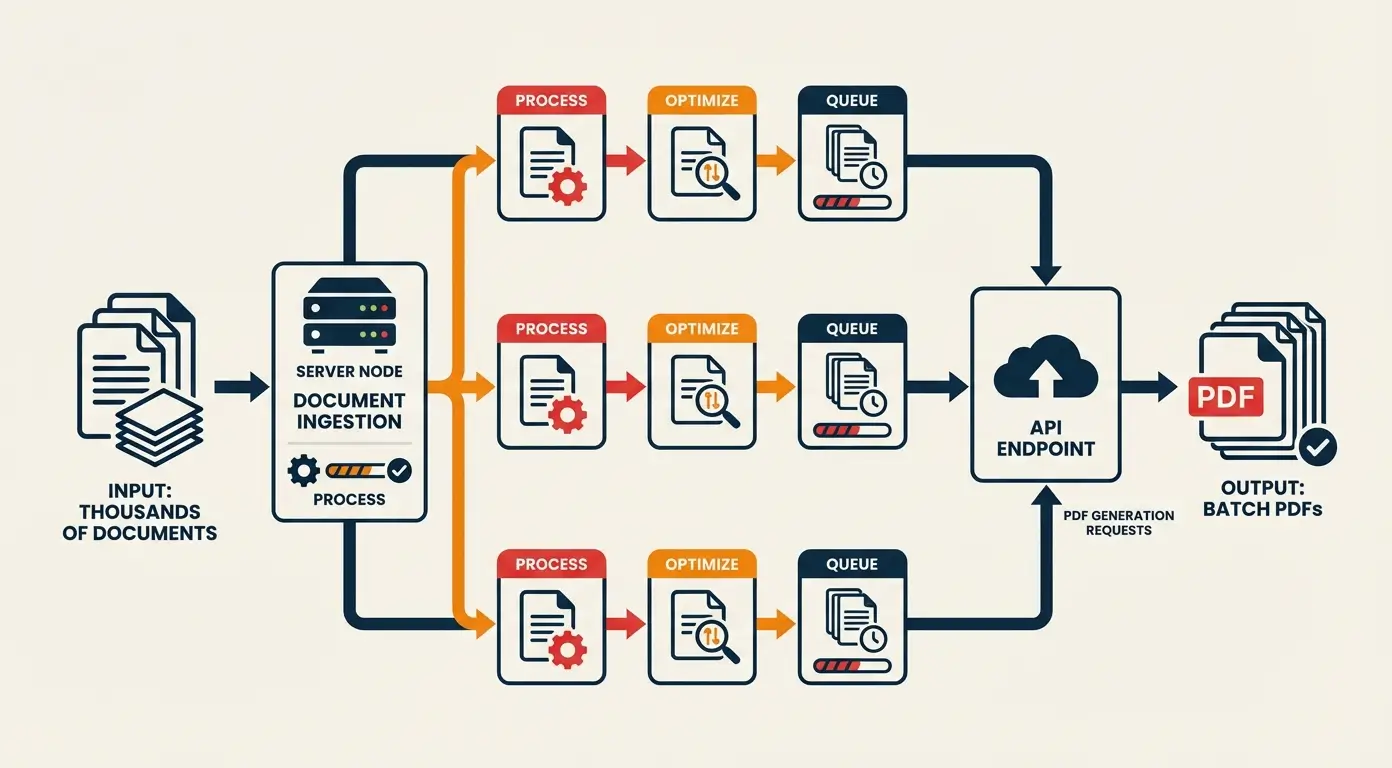
Implementing a scalable and efficient solution, we adopted a cloud-based PDF generation service that allowed us to process documents in parallel, significantly reducing processing time and resource utilization. By leveraging automation and optimizing resource allocation, we improved the overall efficiency of the system.
Comparison
Before the implementation of the new approach, our batch PDF generation process was time-consuming, resource-intensive, and prone to bottlenecks. However, after transitioning to the cloud-based service, we observed a drastic improvement in processing efficiency, scalability, and performance.
Results
The outcomes of our optimized PDF generation approach were remarkable. We achieved a significant reduction in processing time, improved scalability to handle larger document volumes, and enhanced the overall system performance. These results not only benefited our internal processes but also positively impacted user experience.
Lessons Learned
Through this experience, we learned the importance of adopting scalable and efficient solutions for batch PDF generation. By prioritizing performance and scalability, we were able to overcome challenges and enhance the overall system efficiency.
Conclusion
Optimizing batch PDF generation is crucial for improving system performance and scalability. By implementing best practices and leveraging efficient solutions, developers and technical decision-makers can streamline document processing, enhance efficiency, and deliver a superior user experience.