Optimizing Docker Image Size for Efficient PDF Services
 Subham Jobanputra
Introduction
As developers, we often face the challenge of managing Docker image sizes efficiently, especially when dealing with PDF services. In this blog post, we explore the process of optimizing Docker images for PDF-related tasks to improve performance and reduce resource consumption.
Background
Traditionally, Docker images for PDF services tend to be bulky due to the inclusion of unnecessary dependencies and redundant files. This results in slower startup times, increased storage requirements, and inefficient resource utilization.
Pain Points or Limitations
The large size of Docker images can lead to longer deployment times, slower scaling, and higher costs associated with storage and bandwidth. This bloated image size also makes it challenging to share and distribute images effectively.
Decision-Making Process
When faced with the need to optimize Docker images for PDF services, we analyzed the existing image composition, identified the most resource-intensive components, and evaluated alternative solutions to reduce size without compromising functionality.
New Approach (Solution)
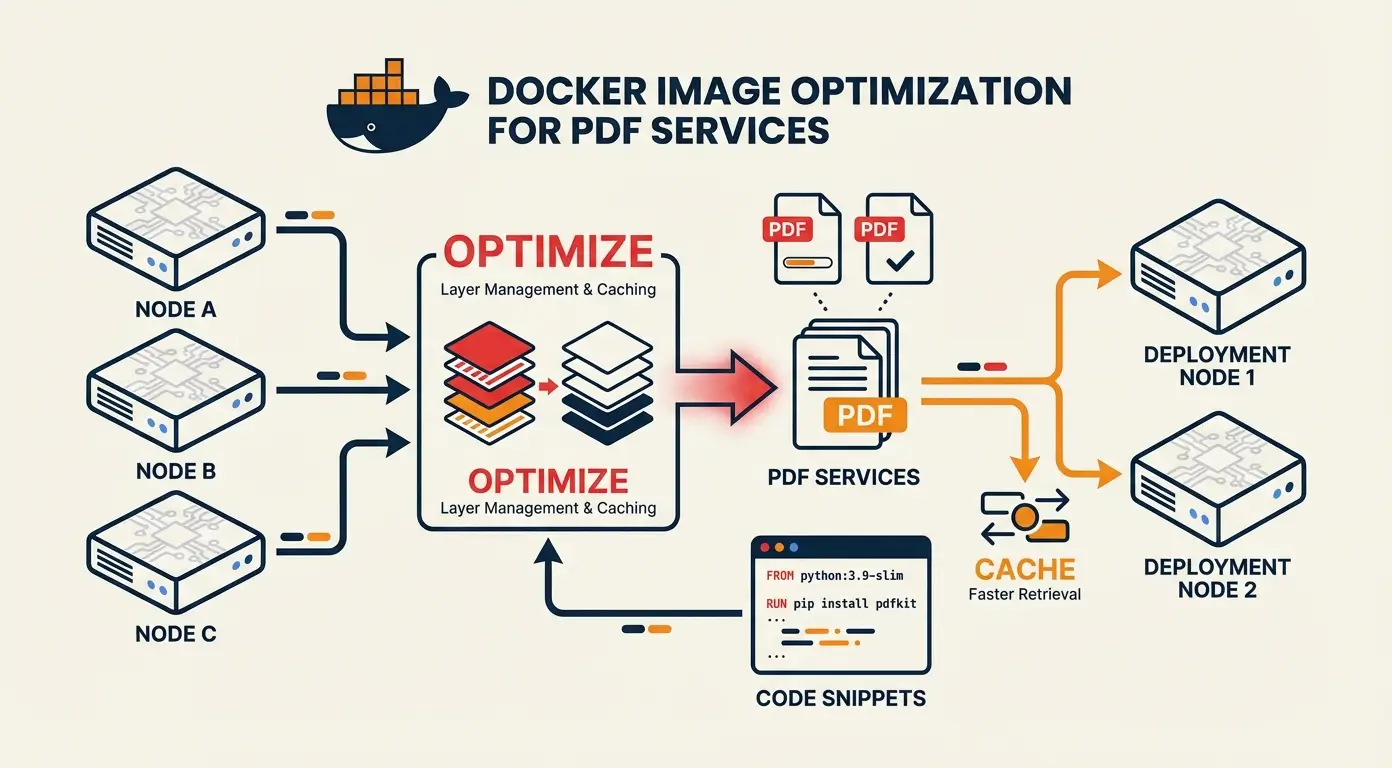
By adopting a modular approach to Docker image construction, we selectively included only essential libraries and dependencies required for PDF processing. We also leveraged multi-stage builds to minimize the final image size by segregating the build environment from the runtime environment.
Comparison (Before vs After)
Before implementing these optimization strategies, our Docker images for PDF services were bulky, slow to deploy, and resource-intensive. After the optimization process, we witnessed significant reductions in image size, faster startup times, and improved resource efficiency.
Results / Outcomes
The optimized Docker images not only streamlined our development and deployment processes but also enhanced the overall performance of our PDF services. We observed a marked decrease in storage requirements and a notable improvement in scalability and resource utilization.
Lessons Learned
Throughout this optimization journey, we learned the importance of prioritizing efficiency and performance in Docker image creation. We also gained insights into best practices for minimizing image size while maintaining functionality and reliability.
Conclusion
Optimizing Docker image size for PDF services is a crucial aspect of modern development practices. By implementing targeted strategies to reduce image bloat and enhance efficiency, we can significantly improve the performance and scalability of our PDF-related workflows.