Optimizing Headless Browser PDF Generation: A Performance Case Study
 Subham Jobanputra
Introduction
Generating PDFs from a headless browser is a common practice in web development, but the performance can vary significantly. In this case study, we detail our experience in optimizing PDF generation performance using headless browsers.
Background / Existing Approach
Initially, our team used a traditional method for PDF generation, involving manual scripting and browser interactions. This approach, though functional, was time-consuming and error-prone.
Pain Points or Limitations
- Slow PDF generation process
- Inconsistent output quality
- High manual intervention
Decision-making Process
Realizing the need for a more efficient solution, we transitioned to headless browsers for automating PDF generation after thorough research and discussions.
New Approach (Solution)
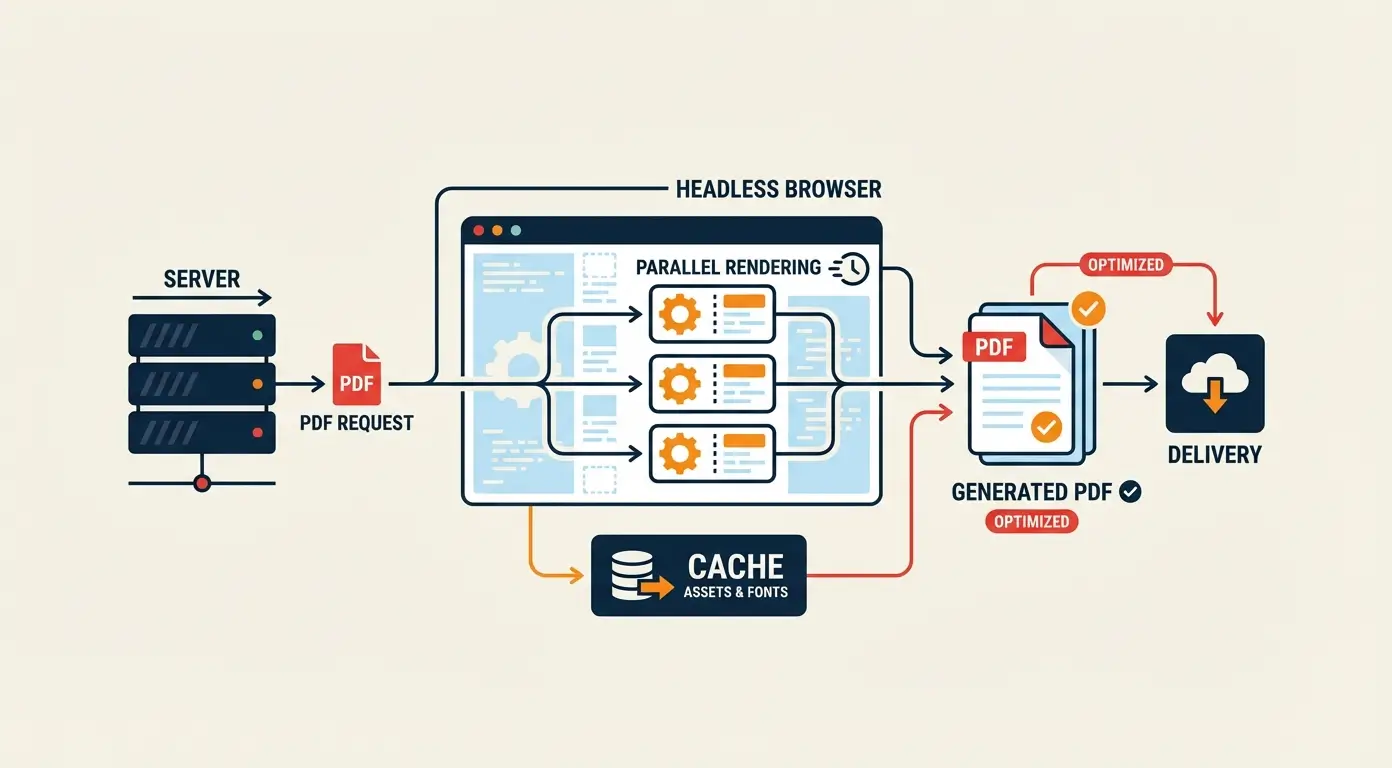
Implementing headless browsers allowed us to automate PDF generation tasks, eliminating manual intervention and enhancing overall performance.
Comparison (Before vs After)
Before adopting headless browsers, our PDF generation process was time-consuming. With the new approach, we significantly reduced PDF generation time, leading to a more efficient workflow.
Results / Outcomes
- Faster PDF generation times
- Consistent output quality
- Reduced manual effort
Lessons Learned
Our experience highlighted the value of leveraging automation tools like headless browsers to improve performance and efficiency. Continuous evaluation and optimization are crucial in the dynamic web development landscape.
Conclusion
Optimizing PDF generation performance with headless browsers transformed our workflow. Embracing automation and modern technologies allowed us to deliver better results efficiently.